Guide for Wedding Vendors: Inclusive + Gender Neutral Wedding Language
Filed in Education / February 12, 2026 /
Before we get into the list, I want to talk about a few things. When researching how to best support LGBTQ+ nearlyweds or trying to be a more inclusive wedding vendor, using gender neutral language comes up a lot. Which, is great! It’s a simple, important, and actionable item that’s easy to make content about. However, being able to use gender neutral language is not the end goal of being an LGBTQ+ friendly wedding vendor. It’s not the final challenge that unlocks the reward of being Officially Inclusive at the end. Instead, it’s more like the starting point. It’s the first step on an ongoing journey to better serving LGBTQ+ wedding clients.
That being said, I absolutely acknowledge how difficult it can be to rewrite lifelong speaking habits especially for wedding vendors who don’t natively speak English. I give major props to any vendor reading this looking to improve their wedding day language. So, I wrote this guide to help vendors learn and practice. If you’re a wedding vendor struggling with using gender neutral language, email me anytime. I am always happy to help.
Tips for Vendors
- Practice using gender neutral language in your day to day life so you’re already comfortable with it before your next wedding day.
- Never assume what language your clients or their guests want used and always ask your clients before the wedding day. Defaulting to neutral language is the kindest option if you don’t know, but some people find gendered labels affirming for themselves. You won’t know unless you ask. ❤️
- Make sure your client emails, forms, portal, resource guides, and contracts use neutral language.
A Simple Guide to Personal Pronouns
What does it mean when someone gives pronouns with a slash between them, like she/her or they/them?
This is a common way of sharing what pronouns to use when talking about someone. When there are two matching pronouns with a slash between, that means that person uses that set of pronouns only. You may see these written as two words like she/her or three like she/her/hers. Listing two is most common because it’s shorter but they mean the same thing if the words match.
Examples:
She/her – She is getting married today. Where are her flowers? She is looking at herself in the mirror right now.
He/him – He is getting married today. Where are his flowers? He is looking at herself in the mirror right now.
They/them – They are getting married today. Where are their flowers? They are looking at themselves in the mirror right now.
Note: They/them pronouns are singular when used for one person. They aren’t a new concept, English already has singular they pronouns that we use daily. Consider: “Where did they go?” “What was their name?” “Can you grab that for them?” So don’t be scared, you already use singular they.
What about when the words don’t match like she/they or they/he?
When you see pronouns listed like this, it is an abbreviated way of saying the person is open to people calling them by either set of pronouns. Sometimes, whichever pronoun is listed first is preferred but the person is fine with either. Sometimes, the person truly wants both (or all) used equally. You can always ask to know what that individual finds most comfortable.
Examples:
She/he – She is getting married today. Where are his flowers? She is looking at himself in the mirror right now.
They/she – They are getting married today. Where are their flowers? She is looking at herself in the mirror right now.
What does any/all mean?
When someone says they use any/all pronouns, it means exactly that. That person is comfortable with any pronoun. Oftentimes, people who use any/all pronouns find that most people will default to whatever pronoun they “look” most like. So, it feels incredibly affirming when someone takes the time to actually use more than one pronoun.
Example:
Any/all – They are getting married today. Where are her flowers? He is looking at xemself in the mirror right now.
What was that last pronoun, xemself?
If you love linguistics like I do, you’re in for a treat. Neopronouns are neologistic third-person personal pronouns beyond those that already exist in a language (thanks wikipedia). Basically, they are a way of playing with language and having fun with self expression. In English, there are some more commonly used neopronouns but nearly any word or sound can be turned into a pronoun because we have an specific, replicable grammatical structure for how pronouns are used.
Example:
xe/xem/xyr – Xe is getting married today. Where are xyr flowers? Xe is looking at xemself in the mirror right now.
ey/em/eir – Ey is getting married today. Where are eir flowers? Ey is looking at emself in the mirror right now.
Tips for Vendors
- Include your pronouns on your about page, social bios, and email signature. Even if you aren’t LGBTQ+, sharing yours first normalizes it for us and shows that we can share ours.
- Ask your clients for their pronouns on your contact form. The field doesn’t have to be required, but have the option.
- Don’t ask for “preferred pronouns” just “pronouns”. They aren’t a preference, they are a part of us just as much as our names are.

Gender Neutral Alternatives for Popular Wedding Language
Bride + Groom
- Nearlyweds
- Marriers
- Partners
- Spouses-To-Be
- Their Names
- To-Be-Weds
- Fiancés (There are technically gendered versions of this word but spelled with one e has increasingly been used in popular usage as a neutral version over the last decade)
- Betrothed
Example: “Travis, what room is your partner getting ready in?”
Husband + Wife
- Spouses
- Newlyweds
- Married Partners
- Life Partners
- Wedded Partners
- The Newly Married
- Stars of the Show
Example: “Do you know where the newlyweds are right now?”
Bridal Party
- Wedding Party
- Wedding Crew
- Your Entourage
- Your People
- Your VIPs
Example: “Tell the wedding party to meet for photos in front of the house in ten minutes.”
Bridesmaids / Groomsmen
- [Their Name]’s Wedding Party
- Attendants
- Wedding Party Members
- Celebration Crew
- The Inner Circle
Example: “Lisa’s side of the wedding party all need boutonnieres pinned.”
Maid of Honor / Best Man
- Best Person
- Person of Honor
- Honor Attendant
Example: “Will both of you be having a best person stand beside you during the ceremony?”
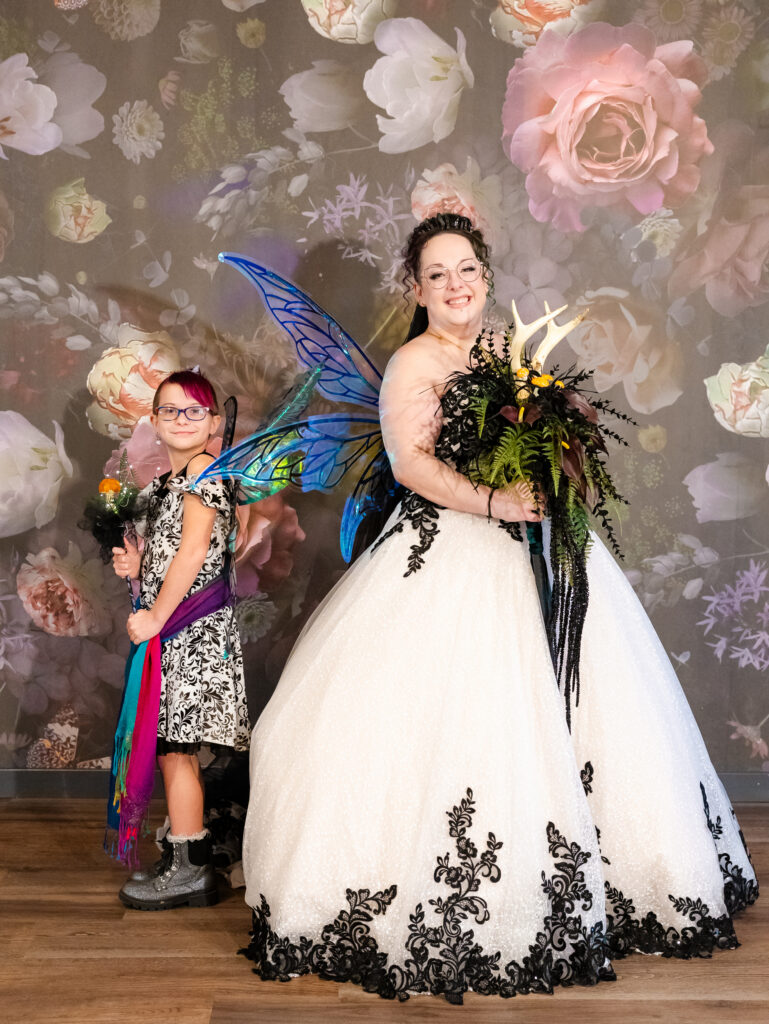
Flower Girl
- Flower Kid
- Flower Pal
- Petal Patrol
- Floral Attendant
- Bloom Bearer
- Petal Toss Pro
- Confetti Captain
Example: “The basket on the table is full of petals for the flower kid.”
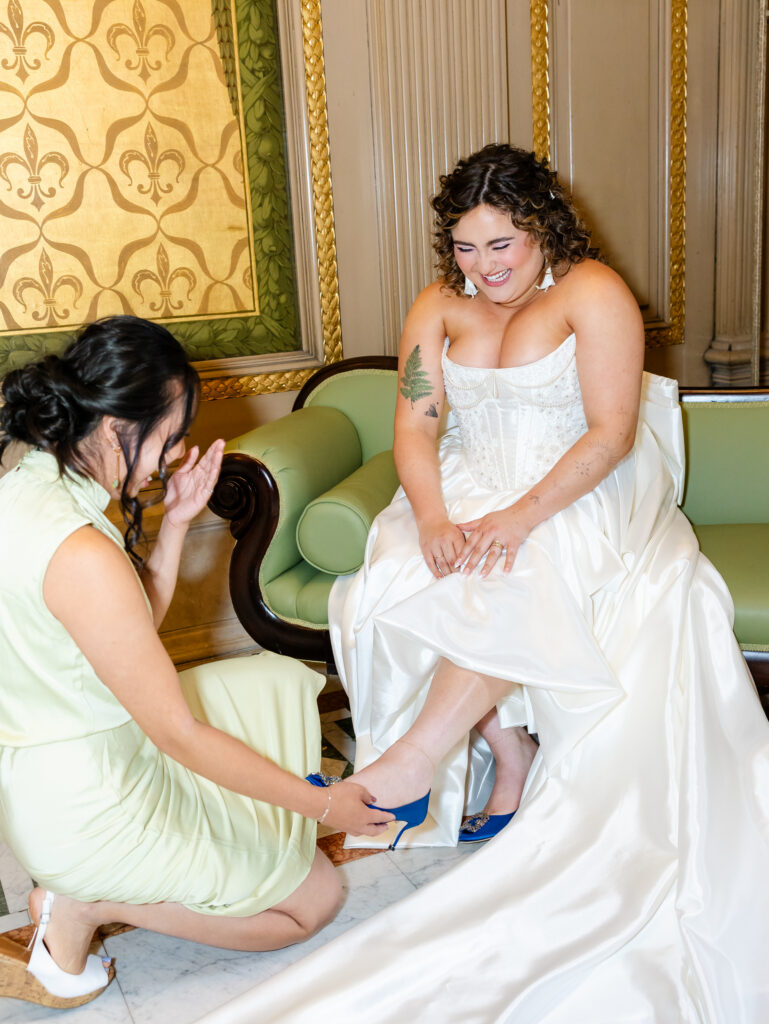
Bridal Suite
- Wedding Suite
- Getting Ready Suite
- Getting Ready Room
- Getting Ready Space
- Prep Suite
- Celebration Suite
Example: “I love that this venue has two wedding suites so everyone has a place to get ready.”
Bachelor / Bachelorette
- Bach Party
- Pre-Wedding Party
- Pre-Wedding Celebration
- Send-Off Party
Example: “I’m having a cabin weekend for my bach party.“
This isn’t a fully exhaustive list. Many nearlyweds will have their own fun versions of some of these terms too. (I’ve seen “The Fellowship” for wedding party a few times). Don’t worry if this seems like a lot. Honestly, you can use partner, wedding party, or someone’s name for most things on a wedding day. The rest are just some more options.
Practice substituting the terms you’re used to with these ones. Using different words is just a matter of rewriting muscle memory. The more you practice, the easier it will get. 🙂
Previous Post:

@mayalovro
Let's be friends on insta.